Five gallons minimum, ten preferred. Bowls fail on arithmetic: ammonia concentrates, temperature swings, and there's no room for the bacteria colony.
A betta fish tank kit shop with one selection rule: the welfare consensus. For the first-time keeper who suspects the cup and the bowl aren't the whole story — every kit here clears the vets' checklist first.
Get the setup checklist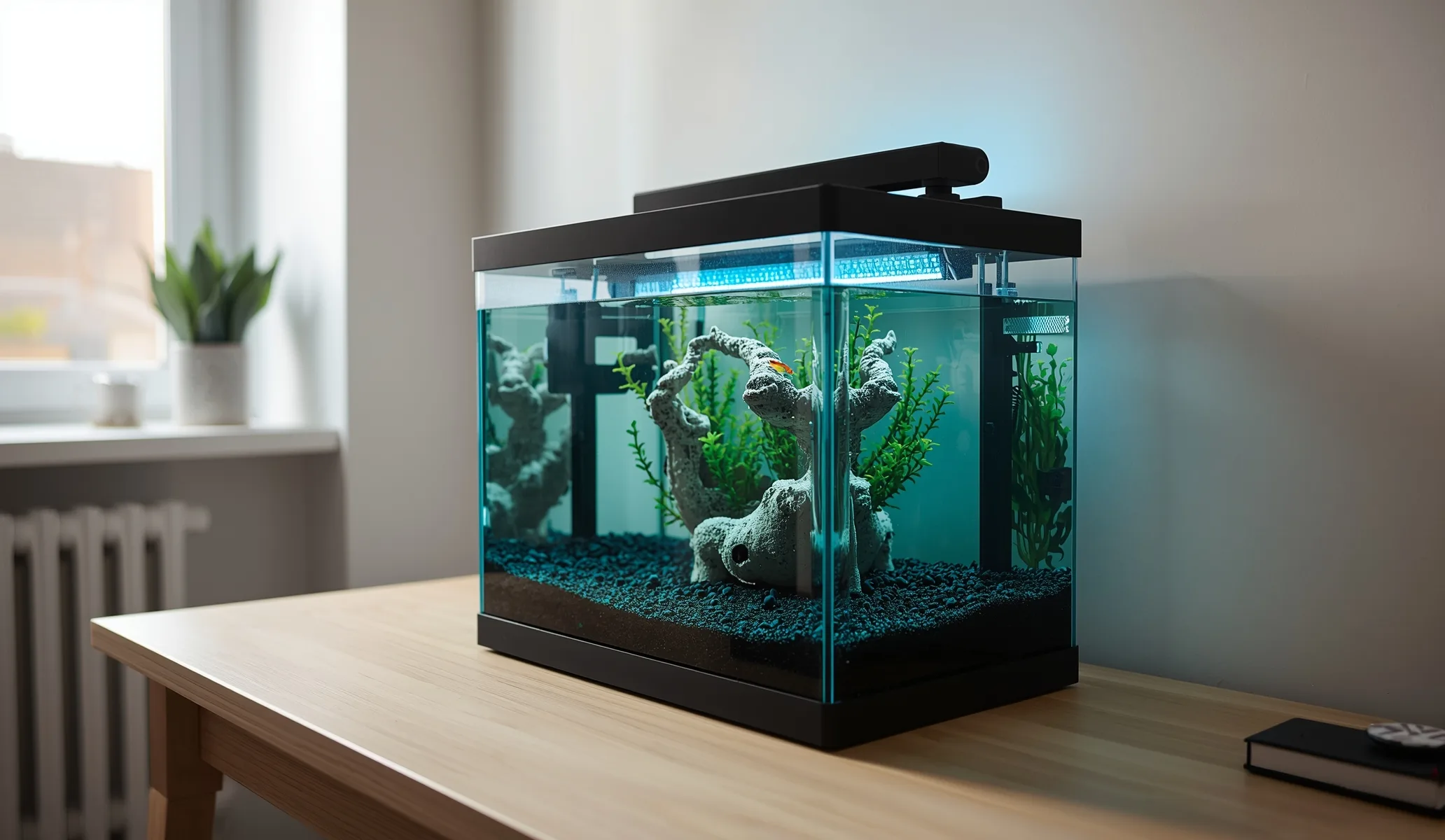
The strange thing about betta advice is that the numbers all exist — published by veterinary programs and care authorities in rare agreement — but nobody assembles them as a purchase filter. Here is that filter: the things to demand from any betta kit, anywhere, before money changes hands.
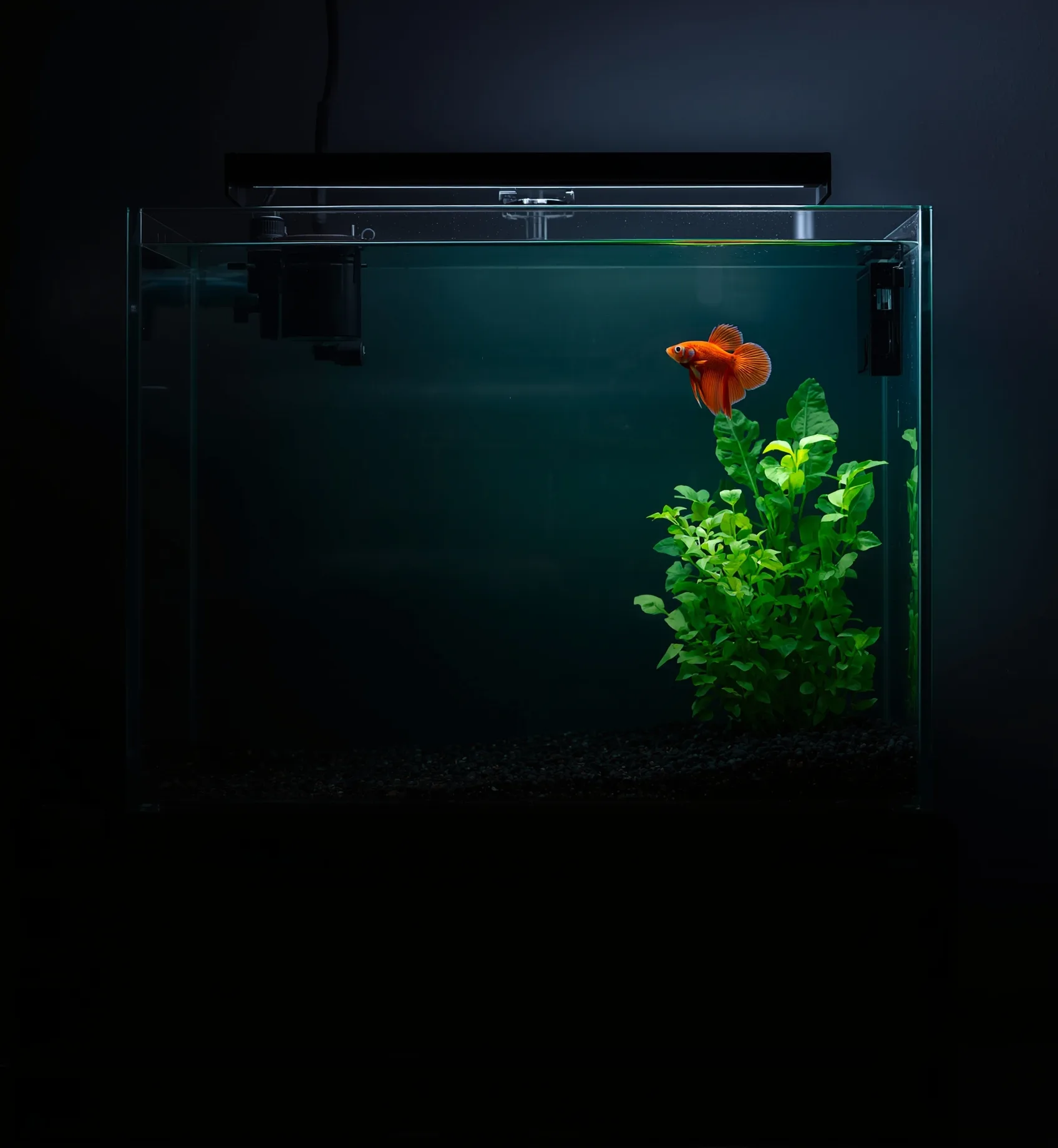
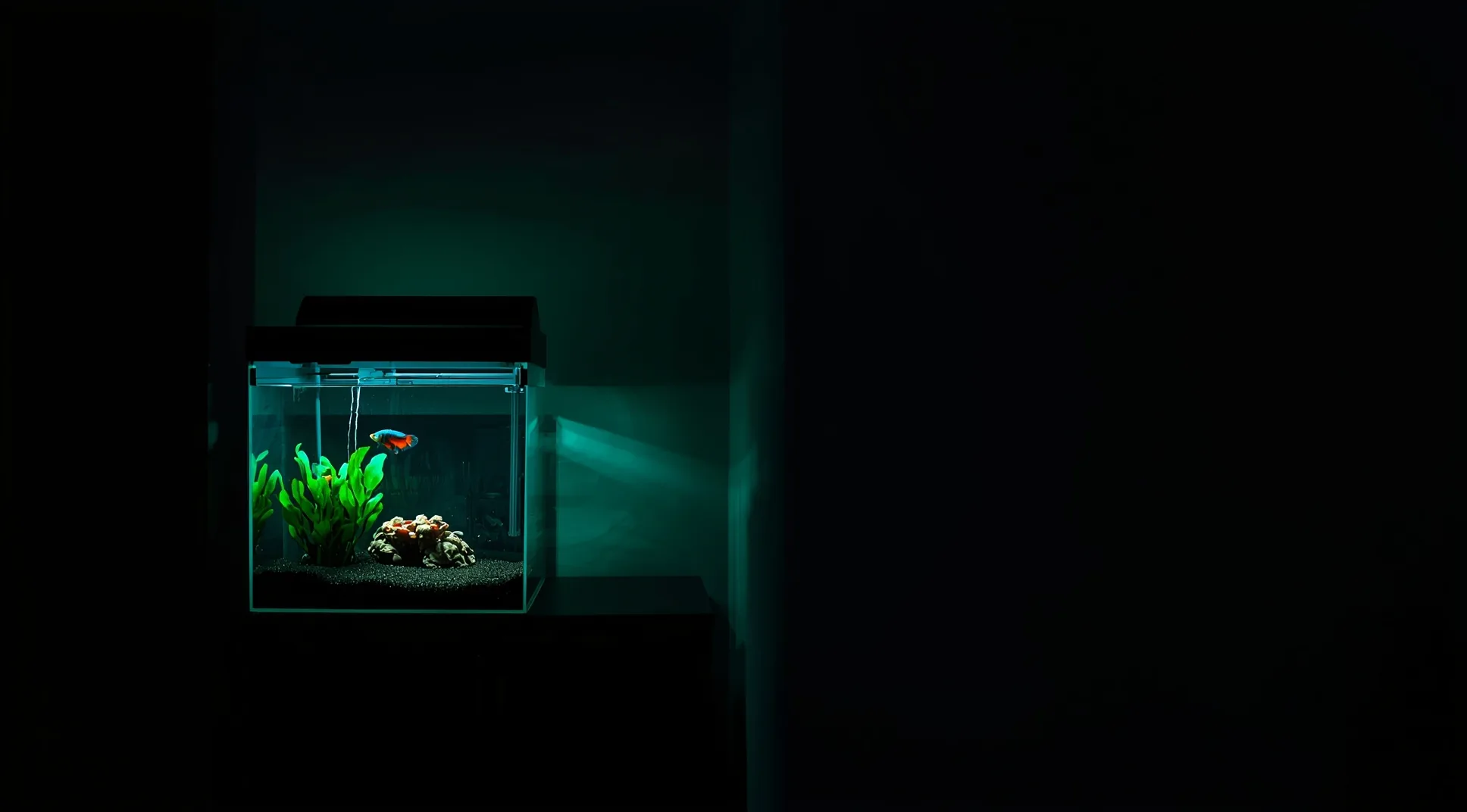
The hero is a complete 5-gallon betta fish tank kit in the class the ~$139.99 premium option defines: rimless glass, concealed rear-chamber filtration, integrated LED. Glass resists clouding, and the footprint gives a betta the horizontal swimming length that matters more than height.
Adjustable flow lets you turn the current down to what heavy betta fins can swim against, and the rear chamber keeps intake suction off them. The LED runs a timed 8–12 hour day, and a lid closes the spec — bettas are genuine jumpers.
This category is crowded with one- to two-and-a-half-gallon 'self-cleaning' betta fish tanks — half the size floor, no room for a heater, and plumbing that never removes the dissolved waste that harms fish.
No tank is self-cleaning — the phrase names a circulation gimmick, not a nitrogen cycle. A two-gallon vessel is a stressful home however clever its plumbing. We don't stock the tier, and now you know why.
Five gallons minimum, ten preferred. Bowls fail on arithmetic: ammonia concentrates, temperature swings, and there's no room for the bacteria colony.
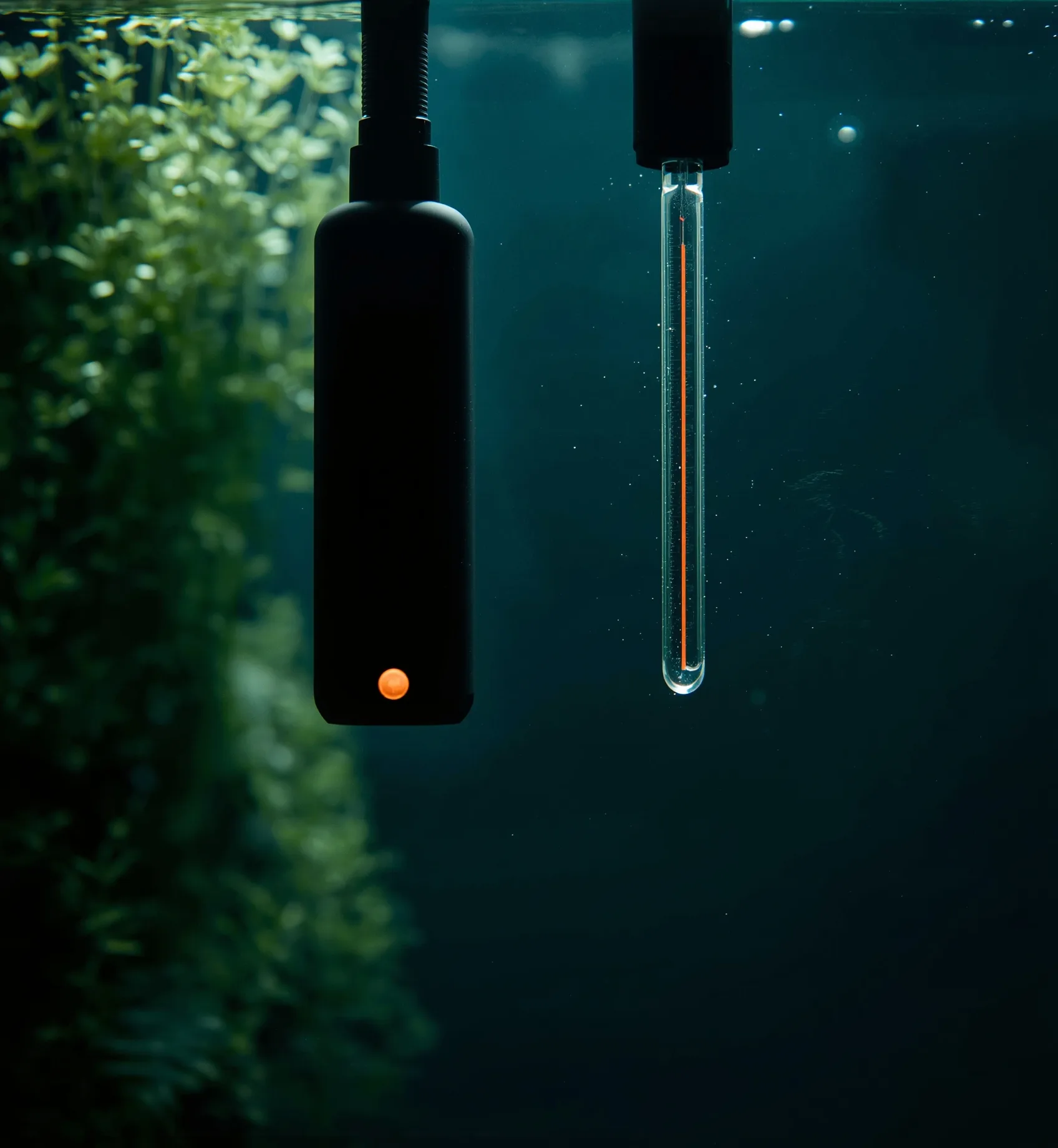
Tropical heat: 76–81°F, 78–80 in practice. A thermostatic heater near 5 watts per gallon, verified by a separate thermometer — standard, not an upgrade.
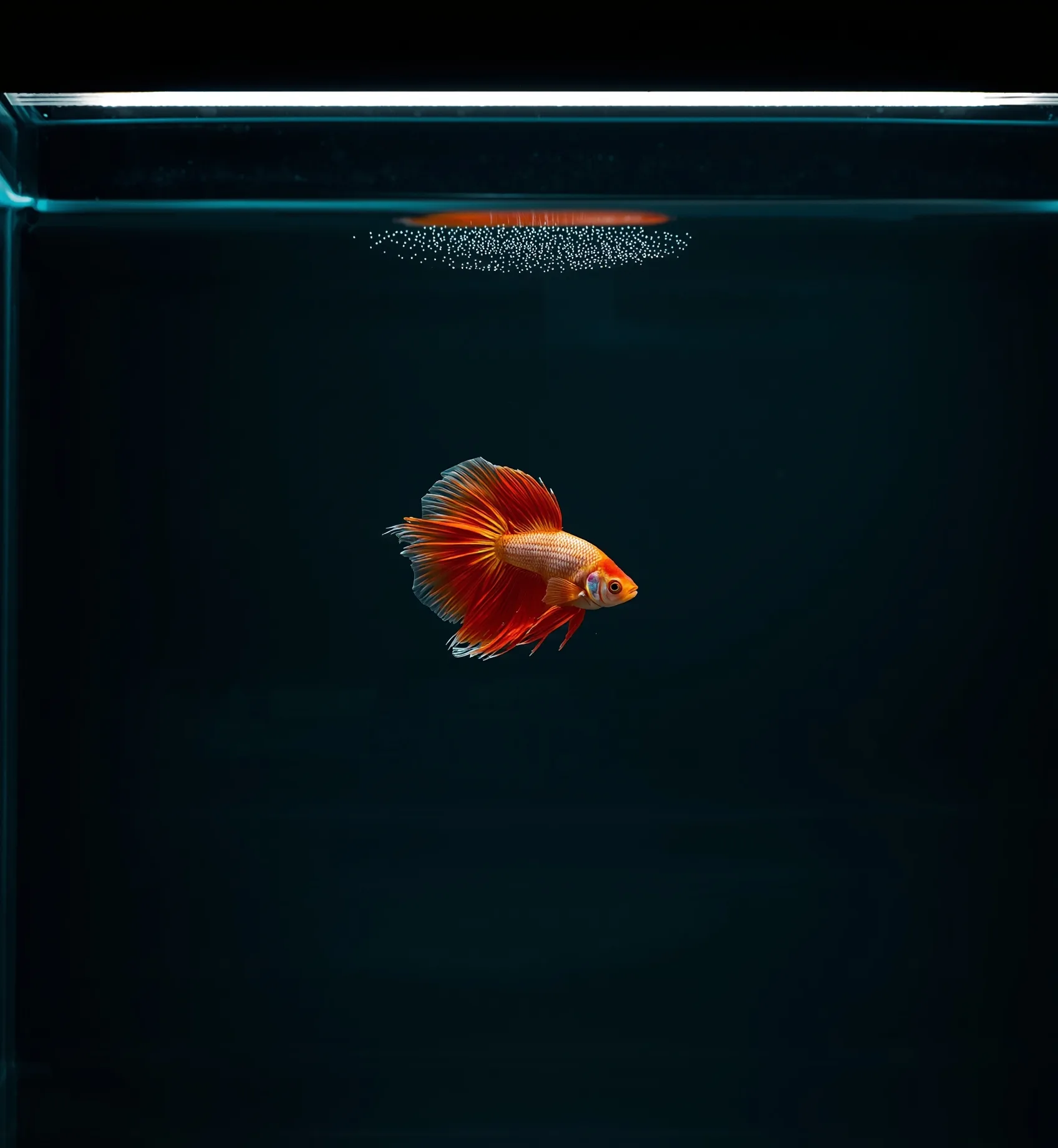
Flow that turns down for heavy fins. Light on a timer, 8–12 hours. And a lid — bettas jump. Fail one demand and it isn't a betta kit.
01
5-gallon consensus floor
02
Adjustable, fin-safe flow
03
Timed 8–12h LED light
The $40–90 class of 5-gallon betta fish tank kits keeps everything that matters — the volume, a real filter, a lid, usually an LED — and trades away refinement: coarser flow adjustment, a basic light, plastic trim instead of rimless glass.
The budget class often omits the heater, and that's the trap: the kit isn't done at the shelf price. Meet the checklist, add the missing pieces, and a $60 kit plus $40 of essentials is a genuinely good betta home. The premium kit earns its price in refinement, not welfare — met specs are met specs.
01 — Fishtankia
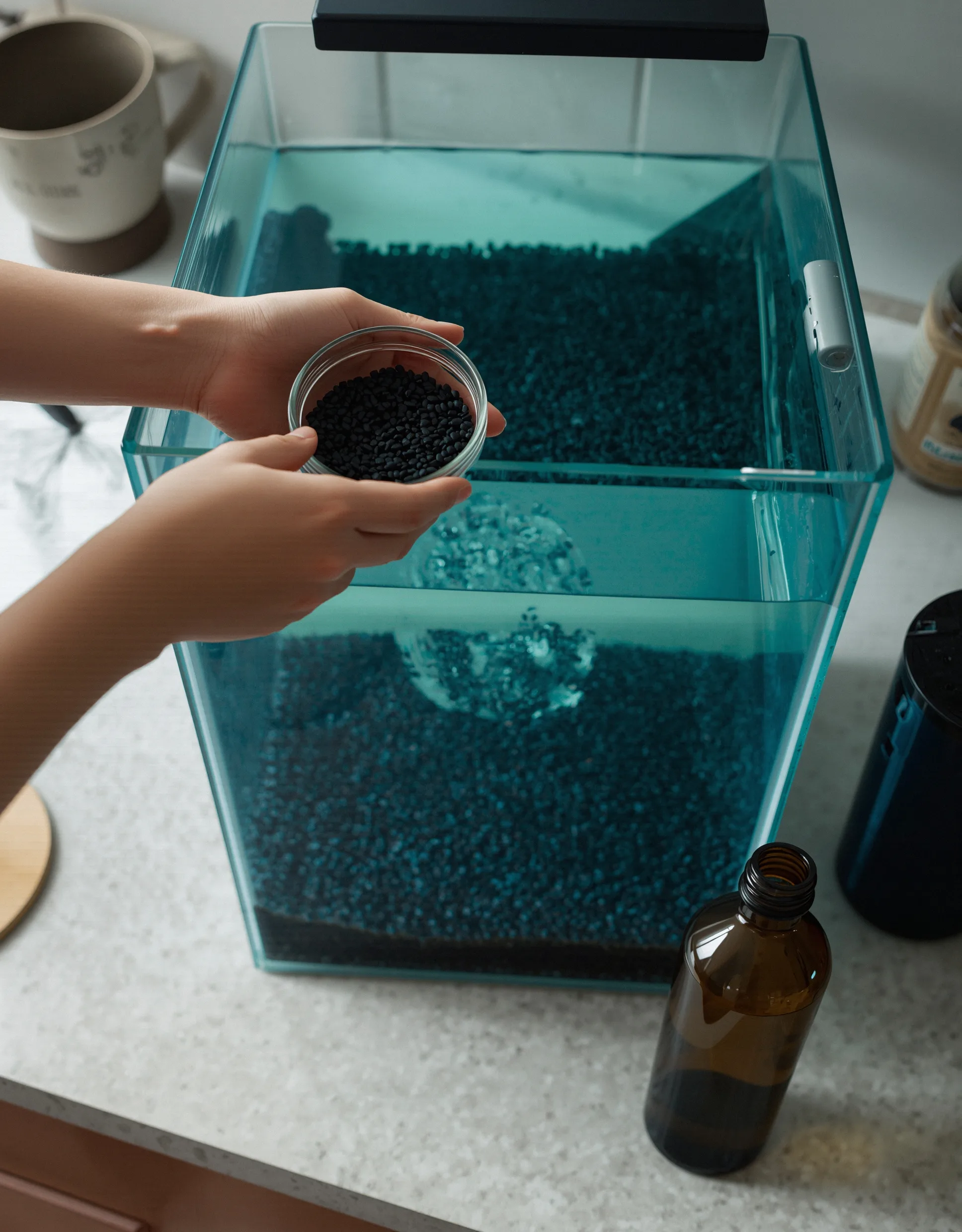
Day one: leak-test the tank, rinse substrate until the water runs clear, fill with tap water and dose conditioner — mandatory, because chlorine kills fish and filter bacteria alike. Never use distilled water; stripped of minerals, it's wrong for fish.
Then the wait — cycling the tank before your betta arrives: run filter and heater one to two weeks, growing the bacteria that turn ammonia into relatively harmless nitrate. From there, care is mostly one weekly 20–30% water change.
02 — Fishtankia
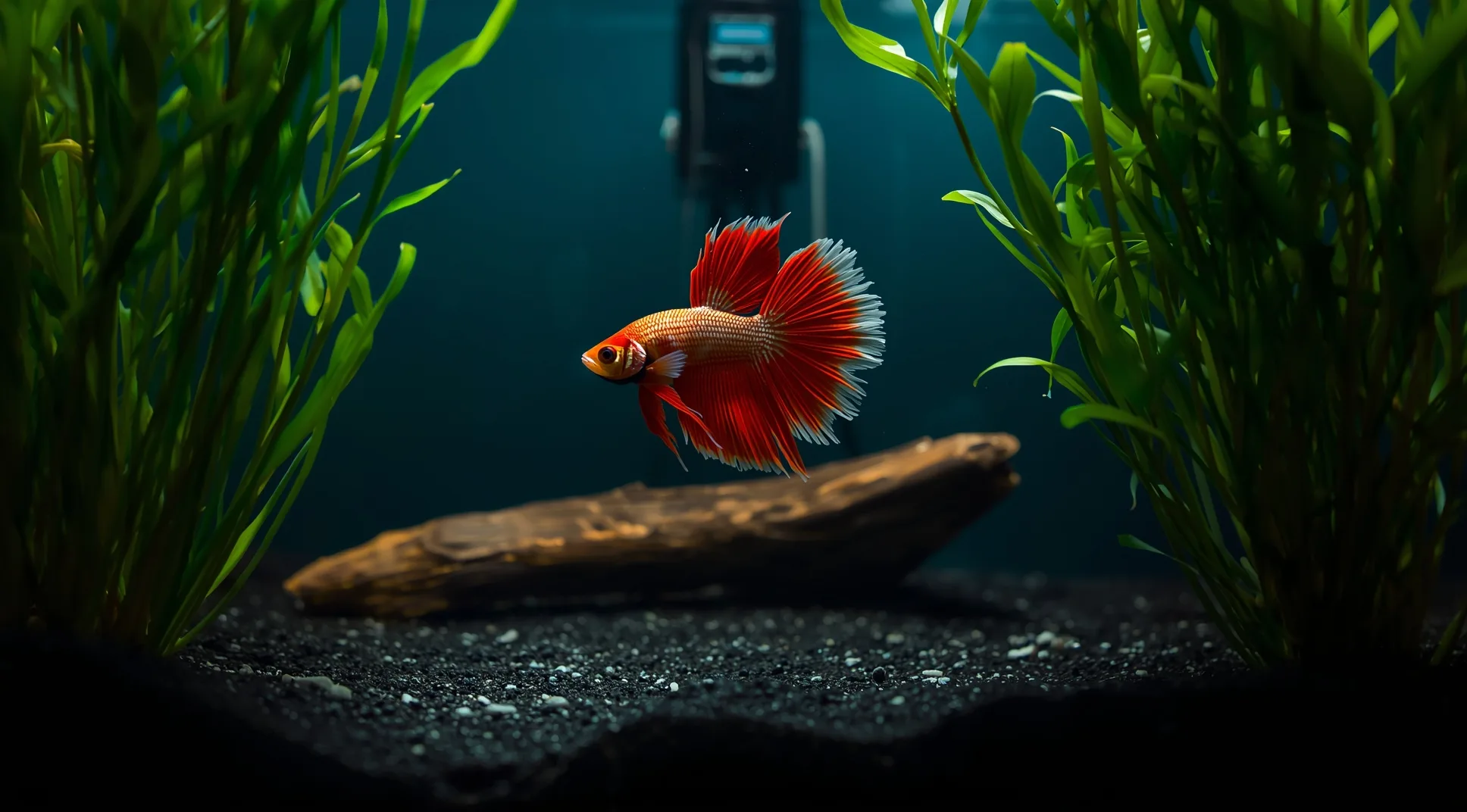
Bettas are intelligent, curious fish, and an empty tank is a dull life. Give yours a cave, plants to weave through — live or silk, never hard plastic — and run the fin-snag test: drag a nylon stocking over decor; if it snags threads, it will snag fins.
Arrange decor around the perimeter and leave the middle open for swimming. Bettas gulp air at the surface — a labyrinth organ lets them — so broad leaves up top double as resting spots. Bettas nap in odd places; a leaf hammock is entirely normal.
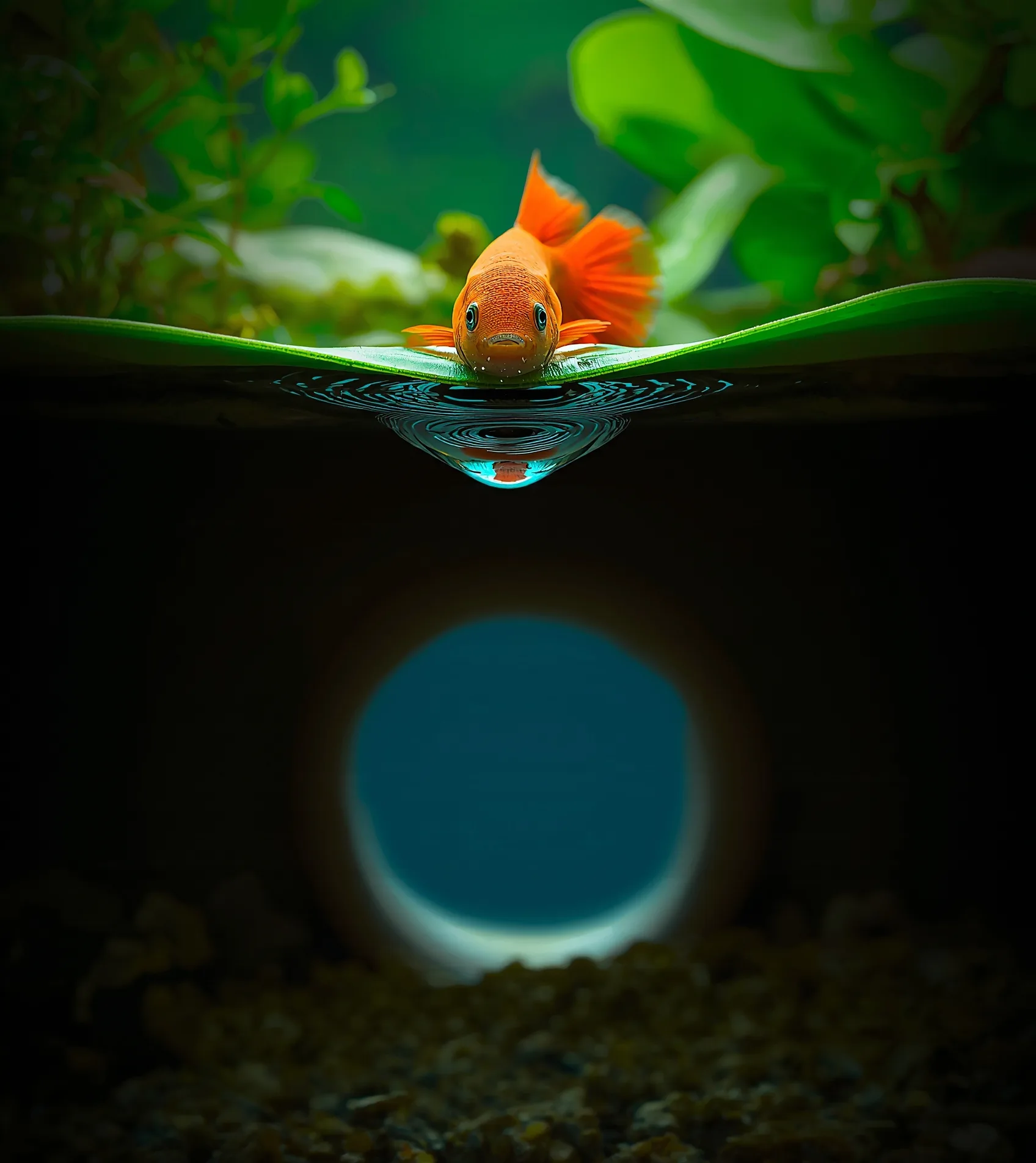
Rimless-class glass 5-gallon with concealed rear-chamber filtration, adjustable flow, and integrated LED — every component answers a line on the vet-consensus checklist. Add a 25-watt heater and thermometer to complete the spec.
$40–140 across the class
Ask about availabilityFive gallons is the consensus floor from veterinary and care authorities, with ten gallons preferred. Bowls and one-to-two-gallon vessels fail on ammonia concentration, temperature instability, and swimming space. A betta can survive in a bowl for a while; it cannot live well in one.
In almost every home, yes. Bettas are tropical fish requiring 76–81°F, and room temperature typically sits well below that. Use a thermostatic submersible heater around five watts per gallon, verified by a separate thermometer.
In a five-gallon betta fish tank, none — keep the betta solo. In ten gallons or more, snails, ghost shrimp, and African dwarf frogs are the classic calm companions. Never house two bettas together; the fighting-fish name is literal.
Yes — treated with a water conditioner every time, because chlorine and chloramine are lethal to fish and filter bacteria. Never use distilled water; it lacks the dissolved minerals fish need.
Test it: drag a nylon stocking over the surface — if it snags threads, it will snag fins. Choose silk or live plants over hard plastic, smooth-edged caves, and keep the center of the tank open for swimming.
Eight to twelve hours a day, ideally on a plug timer. A consistent day-night cycle keeps the fish's rhythm normal and keeps algae from taking over.
Once or twice daily, only what the fish finishes within three to five minutes. Overfeeding is the most common beginner harm — a betta's stomach is about the size of its eye. Treats like bloodworms belong a few times a week, not daily.
The day-one walkthrough and the vet-consensus demand list, plus stock and pricing news for the hero kit.